
Communications and Information Technology Law
Learn about the most important updates in the communications sector
Read moreAll links to official websites of government agencies in the Kingdom of Saudi Arabia end with .gov.sa
Secure websites in the Kingdom of Saudi Arabia use the HTTPS protocol for encryption.
Learn about the most important updates in the communications sector
Read moreThey aim to build a prosperous digital society by developing skills and empowering digital national capacities to accelerate the process of digital transformation. This will contribute to achieving our strategic directions derived from the Kingdom's Vision 2030. We have launched numerous and significant initiatives as follow:
Over the past four years, LEAP has evolved beyond the concept of a technology conference to become a global movement bringing together technology and AI leaders, investors, innovators, and entrepreneurs.
It has also emerged as a platform for major investments, partnerships, and high-impact projects, with the total value of launches and investments announced across its four editions in Riyadh exceeding $44.2 billion.
LEAP’s rapid growth reflects the support and empowerment extended to the communications, technology, and artificial intelligence sectors by His Royal Highness Prince Mohammed bin Salman bin Abdulaziz Al Saud, Crown Prince and Prime Minister. This support has fostered a competitive digital environment that has helped attract investment and advanced technologies while strengthening the Kingdom’s position as a global hub for innovation and the digital
economy in the intelligent era.
In July 2026, LEAP expanded its reach to Asia with the launch of LEAP East in Hong Kong, marking the movement’s first international edition since its inception in Riyadh. The expansion underscored LEAP’s transformation from an annual event hosted by the Kingdom into a Saudi-born platform with a global presence, connecting technology and investment ecosystems across the Middle East and Asia.
As the fifth edition approaches in Riyadh, LEAP continues to build on its accumulated successes and growing economic impact, once again bringing the world together around the latest technologies, opportunities, and investments shaping the future.
LEAP’s journey began in 2022, when its inaugural edition welcomed more than 100,000 visitors, with the participation of over 500 speakers, 700 exhibitors, 403 startups, and more than 330 investors.
The first edition saw launches and investments valued at $6.4 billion, providing an early indication of the event’s ability to attract global capital and companies, connect innovators and entrepreneurs with investors, and transform promising technology ideas into scalable economic opportunities.
In 2023, LEAP continued its growth with its second edition, as attendance rose to more than 172,000 visitors, an increase of over 70% compared with the inaugural edition. More than 700 speakers, 900 exhibitors, 500 startups, and over 1,026 investors participated.
The value of announced launches and investments in the second edition rose to $9.5 billion, representing growth of nearly 48% year on year. This reflected the growing confidence of the global technology and investment community in the Kingdom, as well as LEAP’s expanding role in building partnerships, attracting investment, and supporting the growth of technology companies and startups.
LEAP 2024 marked another major leap in its journey, welcoming more than 215,000 visitors, an increase of 25% compared with the previous edition. It also brought together more than 1,100 speakers, 1,800 exhibitors, over 600 startups, and 1,600 investors.
The value of launches and investments during the third edition reached $13.4 billion, representing growth of nearly 41% compared with 2023 and more than double the value recorded during the inaugural edition. This brought the total value of launches and investments across the first three editions to $29.3 billion.
The results of that edition reflected LEAP’s evolution from a large-scale technology event into a global platform with significant economic and investment impact, bringing together major companies, investors, and innovators while showcasing the latest developments in artificial intelligence, cloud computing, smart cities, fintech, healthtech, edtech, space, and gaming.
The fourth edition in 2025 took LEAP’s journey to a new level, welcoming more than 200,000 visitors and bringing together more than 1,000 speakers, 1,800 exhibitors, and over 680 startups as part of a global program featuring industry leaders, experts, investors, and decision-makers.
The edition saw the announcement of investments and projects valued at $14.9 billion, focused on artificial intelligence, cloud computing, data centers, and advanced technology infrastructure, with the participation of several leading global companies, including Lenovo, Google, Qualcomm, Salesforce, Tencent Cloud, Databricks, and SambaNova.
These investments contributed to the development of AI infrastructure, the advancement of national capabilities, the growth of technology startups, and the acceleration of innovation, further demonstrating the Kingdom’s attractiveness for high-value investments and reinforcing its position as the largest digital economy in the Middle East and North Africa.
With the results of the fourth edition included, the total value of announced launches and investments across LEAP’s four editions exceeded $44.2 billion. The annual value of announcements rose from $6.4 billion in 2022 to $14.9 billion in 2025, representing growth of approximately 133%.
LEAP’s figures demonstrate sustained growth in both its scale and impact. The number of exhibitors increased from more than 700 at the inaugural edition to over 1,800 at both the third and fourth editions, while the number of speakers doubled from more than 500 to over 1,000.
The number of startups rose from more than 403 in 2022 to over 680 in 2025, while investor participation grew from more than 330 at the inaugural edition to 1,600 at the third edition, reflecting LEAP’s expanding role in connecting startups with capital, markets, and global expertise.
Following four editions in Riyadh, LEAP entered a new phase of international expansion with the inaugural edition of LEAP East, held at the Hong Kong Convention and Exhibition Centre from July 8 to 10, 2026, in partnership with the Innovation, Technology and Industry Bureau of the Government of the Hong Kong Special Administrative Region.
The edition attracted more than 25,000 visitors, 450 exhibitors, and over 600 investors, bringing together technology leaders, investors, and startup founders from Asia and the Middle East.
Saudi technology companies also participated, showcasing their solutions and innovations to global markets.
LEAP East embodied LEAP’s expansion from Riyadh onto the global stage and its role in building a technology and investment bridge between the Middle East and Asia, enabling startups to access new markets and strengthening collaboration in artificial intelligence, advanced technologies, and entrepreneurship.
The selection of Hong Kong as the exclusive home of LEAP’s Asian edition for the next three years further confirmed that LEAP is no longer an event tied to a single place or date, but a global technology movement born in the Kingdom whose impact has expanded to international innovation and investment ecosystems.
Riyadh is now preparing to host the fifth edition of LEAP from August 31 to September 3, 2026, at the Riyadh Exhibition and Convention Center in Malham, under the theme “Into New Worlds.” The event is organized by the Ministry of Communications and Information Technology, the Saudi Federation for Cybersecurity, Programming and Drones, and Tahaluf.
The fifth edition will bring together more than 1,000 global speakers and experts, over 1,800 technology companies, more than 600 startups, and over 1,900 investors and venture capital representatives.
The upcoming edition will explore the latest trends shaping the future of technology, led by artificial intelligence, cloud infrastructure, data, cybersecurity, fintech, healthtech, smart cities, energy and climate, space, gaming, sports technology, and digital commerce.
The fifth edition will also feature a range of dedicated spaces and experiences, including LEAP Connect for building connections and partnerships, the Sports Tech Hub to explore the future of sports technology, the World Tech Zone to showcase global innovations, and LEAP Studios for live content creation, alongside programs for startups and investors and platforms for announcing investments, agreements, and technology initiatives.
LEAP’s journey stands as a model of a Saudi-born movement with global impact, extending far beyond hosting events to contribute to attracting investment and advanced technologies, empowering talent and entrepreneurs, supporting the expansion of startups, and strengthening the Kingdom’s presence in the global digital economy.
Saudi Arabia has leveraged its advanced digital infrastructure and partnerships with leading global technology companies to establish its position as a global hub for artificial intelligence investment, underpinned by competitive advantages that include reliable energy, vast land availability, and a strategic geographic location.
The Kingdom has made rapid strides in the data center sector, with capacity increasing from 68 MW in 2021 to more than 467 MW in the first quarter of 2026, supported by investments exceeding SAR56.2 billion in data centers and digital infrastructure. The sector has grown more than sixfold since the launch of Saudi Vision 2030, as part of a national data and AI strategy that contributes to economic diversification and strengthens the Kingdom’s readiness for the knowledge economy.
Saudi Arabia has further strengthened its position as a global destination for technology investment by attracting some of the world’s largest cloud service providers. The Kingdom hosts operations for Oracle, Alibaba Cloud, and Google Cloud, alongside an SAR11 billion strategic partnership between HUMAIN and Blackstone, reflecting growing global confidence in Saudi Arabia’s digital investment environment.
This investment appeal is underpinned by a comprehensive set of competitive advantages, including abundant energy resources, extensive land available for data center expansion, and a geographic location connecting Asia, Africa, and Europe, positioning the Kingdom second globally in data center market attractiveness.
Saudi Arabia’s leadership has extended to helping shape the future of the global digital economy. As one of the leading G20 countries in the communications and technology sector, the Kingdom led G20 consensus on a roadmap for defining and measuring the digital economy and the adoption of human-centered, trustworthy AI principles. It also contributed to transforming the Digital Economy Task Force into a permanent working group, reinforcing its role as an international partner in advancing digital policies and strengthening global cooperation in technology.
As part of its efforts to bridge the global digital divide, the Kingdom has led pioneering initiatives, including a 5G trial using High-Altitude Platform Systems (HAPS), which demonstrated the ability to cover nearly half a million square kilometers in remote areas. Saudi Arabia also conducted the first-of-its-kind trial integrating non-terrestrial networks (NTN) with terrestrial networks, offering a future solution for expanding connectivity and accelerating access for unconnected communities.
These achievements have been reflected in the Kingdom’s performance across international indicators. Saudi Arabia ranked first globally twice in the International Telecommunication Union’s (ITU) 2026 ICT Development Index, outperforming 159 countries, reflecting the strength of its integrated digital infrastructure, widespread connectivity, and high levels of digital adoption. The Kingdom also ranked second among G20 countries in the ITU’s ICT Regulatory Tracker and second among G20 countries in digital competitiveness according to the European Center for Digital Competitiveness, while digital infrastructure coverage reached approximately 99% of the Kingdom’s population.
Saudi Arabia has continued to strengthen its standing across global AI indices, ranking first in the Arab world and 14th globally in the Global AI Index. The Kingdom also ranked first globally in AI security, privacy, and encryption; first in women’s empowerment in AI; third globally in the development of advanced AI models; and third in the share of specialized AI talent, while recording the world’s highest growth rate in specialized talent. It also ranked fourth globally in attracting international talent.
The impact of this progress has extended to empowering people and improving quality of life. Saudi Arabia launched the world’s largest virtual hospital, leveraging artificial intelligence technologies to deliver advanced healthcare services. The Kingdom has also made significant strides in empowering women in the technology sector, with their participation rising from 7% to 35%, surpassing the averages of both the G20 and the European Union. This reflects the success of investing in human capital alongside investment in digital infrastructure.
Saudi Arabia’s readiness has also received recognition from independent international institutions. JLL, as reported by Bloomberg, expects Riyadh to lead the growth of AI-related data centers in the Middle East, further underscoring the Kingdom’s growing position as one of the world’s leading destinations for investment in artificial intelligence and digital infrastructure.
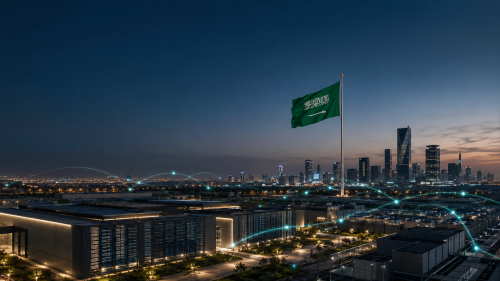
The World Bank Group's World Development Report 2026, titled The Promise of Artificial Intelligence, highlights Saudi Arabia's growing position in the global artificial intelligence landscape, placing the Kingdom among the world's top 10 countries for private AI investment and highlighting it as an attractive destination for AI talent and a model for government data integration.
This international recognition reflects the support and empowerment of the Kingdom's leadership through an integrated national approach established by Saudi Vision 2030 to build an economy driven by data, compute, and innovation, and to reinforce the Kingdom's position in shaping the future of artificial intelligence.
The recently released report is the World Bank's first comprehensive assessment of the impact of artificial intelligence on developing economies, the opportunities it creates for individuals, firms, and governments, and the requirements needed to maximize its development impact while managing associated risks.
The report is structured around three key dimensions that shape the impact of artificial intelligence on development: Capabilities, through which AI can broaden access to expertise and support decision-making; Concentration, resulting from the production of advanced models, chips, and data centers being concentrated in a limited number of countries and companies; and Complements, including infrastructure, data, skills, and institutions. Through these dimensions, the report outlines a progressive pathway that begins with adopting available tools, moves toward adapting them to local languages, data, institutions, and needs, and ultimately advances toward developing cutting-edge technologies and the infrastructure that enables them.
The report emphasizes that harnessing the benefits of artificial intelligence depends not only on having the largest models, but also on building an interconnected ecosystem encompassing connectivity, compute, data, skills, and institutions. It notes that solutions tailored to local contexts can broaden access to expertise, increase productivity, improve public services, and support economic growth.
Under the Concentration dimension, which examines the concentration of advanced AI infrastructure and related investment, the report notes that Saudi Arabia combines tax incentives with special economic zones to attract investment in data centers and build compute capacity. This national approach links capital attraction with the development of a broader ecosystem encompassing talent, startups, energy, and the infrastructure required to support the growth of AI applications.
This recognition aligns with the rapid growth of the Kingdom's digital infrastructure. Data center capacity increased from 68 MW in 2021 to 440 MW in 2025, before rising further to 467 MW in the first quarter of 2026, representing an increase of more than 6% since the beginning of the year and nearly sevenfold compared with 2021. 4G and 5G network coverage reached 99% by the end of 2025, while average internet speed reached 216 Mbps, providing key enablers for the expansion of cloud services and AI applications.
Under the Capabilities dimension, the report highlights Saudi Arabia's ability to attract specialized talent, noting that in 2025 the Kingdom was among the economies with the highest net inflows of AI professionals per 10,000 LinkedIn members, alongside Luxembourg, Australia, and Switzerland. Saudi Arabia also recorded a net inflow of 3.08 among leading AI authors and innovators in the same year, reflecting the growing attractiveness of the Saudi technology ecosystem to highly specialized talent.
This momentum is accompanied by continued growth in the Kingdom's national talent base. Saudi Arabia's technology workforce has grown to approximately 426,000, representing cumulative growth of 186.6% compared with 2018, when it stood at 150,000. Women's participation in communications and information technology professions has also risen to 35%, broadening the Kingdom's talent pool and strengthening the diversity of capabilities supporting an economy driven by technology and innovation.
Under the Complements dimension, the report presents Saudi Arabia's experience as a model for building public data infrastructure. It highlights a platform operated by the Saudi Data and Artificial Intelligence Authority (SDAIA) that enables data integration across more than 60 government entities while allowing the data to remain within their respective systems. The report presents this experience as a model for structured data exchange, enabling government entities to develop more effective applications while strengthening governance, trust, and data protection.
This progress builds on broader achievements across the digital economy, whose contribution has risen to 16% of GDP, while the communications and information technology market reached SAR199 billion in 2025. Saudi Arabia also ranked second globally in the World Bank Group's 2025 GovTech Maturity Index.
The preparation of the report also reflects the Kingdom's presence in the international dialogue on artificial intelligence policy. The report's High-Level Advisory Panel included Minister of Communications and Information Technology Abdullah Alswaha. The report team also benefited from consultation sessions involving the Saudi Competitiveness and Business Center and the WBG–Saudi Arabia Knowledge Hub, alongside national government, private-sector, and research entities that contributed their expertise in data, telecommunications, compute, and innovation.
The report's release carries particular significance following the Cabinet's approval, during its session chaired by His Royal Highness Prince Mohammed bin Salman bin Abdulaziz Al Saud, Crown Prince and Prime Minister, on March 10, 2026, to designate 2026 as the "Year of AI" in Saudi Arabia, underscoring the Kingdom's national focus on future technologies and their role in advancing development, innovation, and competitiveness.
The findings highlighted in the World Bank report affirm that Saudi Arabia is advancing an integrated approach in the intelligent era, bringing together investment in infrastructure, compute and data, talent development, the regulatory environment, and the expanded application of technology across the economy and public services. This approach reinforces the Kingdom's position as a global hub for data and artificial intelligence and supports the objectives of Saudi Vision 2030.
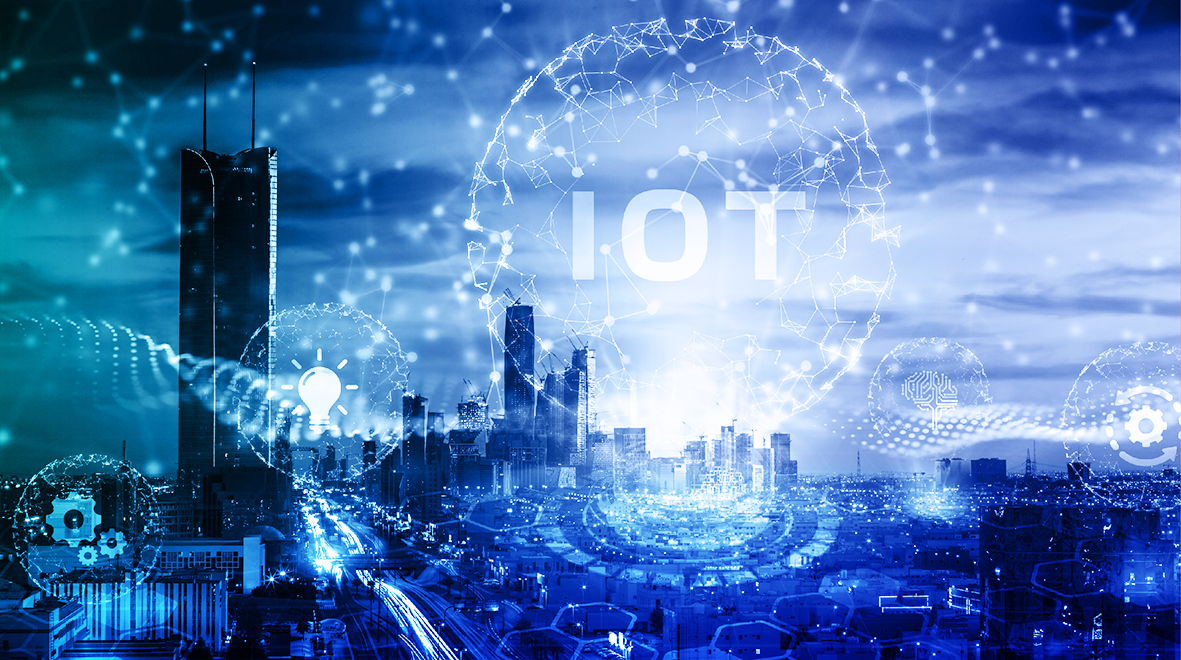
The Internet of Things describes the network of physical things - "things" - that are embedded with sensors, software, a...