
Communications and Information Technology Law
Learn about the most important updates in the communications sector
Read moreAll links to official websites of government agencies in the Kingdom of Saudi Arabia end with .gov.sa
Secure websites in the Kingdom of Saudi Arabia use the HTTPS protocol for encryption.
Learn about the most important updates in the communications sector
Read moreThey aim to build a prosperous digital society by developing skills and empowering digital national capacities to accelerate the process of digital transformation. This will contribute to achieving our strategic directions derived from the Kingdom's Vision 2030. We have launched numerous and significant initiatives as follow:
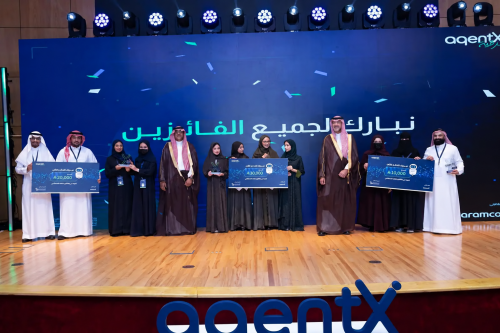
The third edition of the AgentX AI Hackathon for Employment and Business Solutions, held in strategic partnership with the Ministry of Communications and Information Technology (MCIT), concluded in the Eastern Region with the top three teams receiving cash prizes for developing innovative AI solutions to challenges facing key sectors.
Team Sunbulah won first place in the environmental sustainability and carbon emissions reduction track, followed by Team SABBAQ in the energy and industry track. Team MIRSAD secured third place in the logistics and ports track. A total of 30 projects competed in the hackathon.
The event brought together Saudi talent to develop practical AI solutions aligned with labor market needs. Participants developed their ideas, built business solution prototypes, engaged with experts and participating organizations, and explored career opportunities in artificial intelligence.
The hackathon featured four tracks: energy and industry, logistics and ports, beneficiary experience and customer service, and environmental sustainability and carbon emissions reduction. The tracks expanded opportunities for innovation and directed participants' capabilities toward developing solutions to improve operational efficiency, enhance services, and promote sustainability.
The hackathon included a virtual training bootcamp, workshops, and specialized mentoring sessions, culminating in an in-person phase and the presentation of final solutions. The program provided participants with practical experience in developing AI applications, collaborating in multidisciplinary teams, and transforming knowledge into scalable, deployable solutions.
The hackathon is part of ongoing efforts to empower Saudi talent to contribute to AI solution development, strengthen connections to high-quality employment opportunities, and build capabilities that support the digital economy's growth and enhance the Kingdom's competitiveness in the Intelligence Age, in line with Saudi Vision 2030.
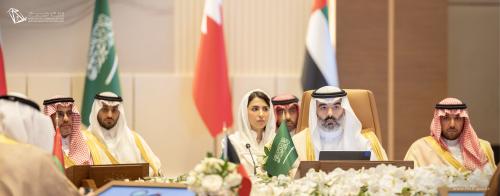
The Kingdom of Saudi Arabia called for sustainable digital connectivity among the Gulf Cooperation Council (GCC) member states and the integration of computing capabilities that safeguard data sovereignty and enable Gulf companies to compete globally. The call aims to strengthen GCC integration in the age of artificial intelligence and transform the member states’ technological and economic capabilities into a collective force that supports their global leadership.
The call came during the Kingdom’s address delivered by Minister of Communications and Information Technology Abdullah Alswaha at the 30th Meeting of the GCC Ministerial Committee for Post and Telecommunications, held in the Kingdom of Bahrain.
Alswaha affirmed that, under the directives of Custodian of the Two Holy Mosques King Salman bin Abdulaziz Al Saud, and His Royal Highness Prince Mohammed bin Salman bin Abdulaziz Al Saud, Crown Prince and Prime Minister, the Kingdom is working alongside its brotherly GCC member states to strengthen Gulf integration through three pillars: advancing from digital resilience to AI leadership; integrating energy and computing capabilities while safeguarding data sovereignty; and building common markets for entrepreneurship to enhance global competitiveness.
He explained that the Kingdom has leveraged its capabilities and infrastructure to support the continuity of data traffic and telecommunications across GCC member states by adding more than 8.4 terabits per second (Tbps) of international capacity and increasing overall capacity by approximately 80% to reach 18 Tbps. He noted that Saudi Arabia had submitted a proposal to the GCC General Secretariat and the country holding the rotating presidency to establish sustainable digital interconnectivity, modeled on the GCC electricity interconnection, to embed digital resilience within a shared and sustainable Gulf framework.
On energy and computing integration, he stated that the Kingdom has made available a range of sites and 14 gigawatts (GW) of power capacity for data centers serving Saudi Arabia, GCC member states, the wider region, and the world. He called for the development of a sustainable model for cooperation in data centers.
Alswaha emphasized the importance of opening markets and harmonizing standards and specifications for Gulf companies, enabling them to move beyond regional competition and compete globally. He noted that GCC member states are home to more than 20 unicorn companies and account for approximately 95% of venture capital investment in the region, reflecting the significant opportunities available for entrepreneurship and innovation.
He stressed that the next phase requires GCC member states to operate as one integrated Gulf ecosystem across data, computing, cloud services, and artificial intelligence, while developing interconnected infrastructure that enables citizens and businesses to access and benefit from these services efficiently and seamlessly across the GCC.
Alswaha concluded by emphasizing that connecting and integrating existing capabilities will form the foundation for strengthening the GCC countries’ ability to compete globally.
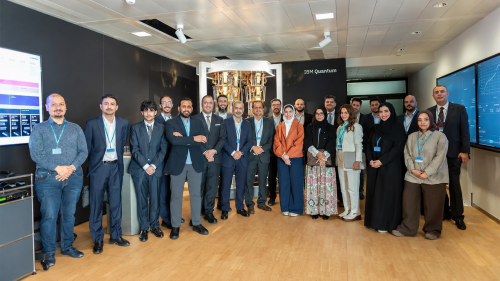
The Ministry of Communications and Information Technology, in partnership with IBM, concluded the Quantum Technologies Leadership Program in Zurich, Switzerland, aimed at enhancing the readiness of leaders and decision-makers to capitalize on opportunities offered by quantum technologies in computing, communications, and sensing, while supporting technological innovation.
Hosted by IBM Research Europe – Zurich, the program provided knowledge-based and practical experience focused on assessing the opportunities and risks associated with quantum technologies, anticipating their future implications for various sectors, and developing policies that support preparedness. It combined practical simulations with international case studies to enable participants to apply technical knowledge to informed strategic decision-making.
The program also included a visit to QuantumBasel in Basel, Switzerland, where participants explored the quantum computing innovation ecosystem and its practical applications, as well as the center’s collaboration with IonQ, deepening leaders’ understanding of pathways for transitioning quantum technologies from research to commercial applications.

The Internet of Things describes the network of physical things - "things" - that are embedded with sensors, software, a...